
Introduction
As the year draws to a close, December offers an important moment for reflection, healing, and hope. For individuals who identify as lesbian, gay, bisexual, transgender, queer, or questioning (LGBTQ), this season can be both meaningful and emotionally complex. Family gatherings, faith conversations, social expectations and end-of-year reflections may surface unresolved questions about identity, belonging and acceptance. At Comfort Counseling Services, we recognize the need for counseling that is ethical, compassionate, psychologically sound and culturally sensitive, while honouring the dignity of every human being.
This article explores the purpose of LGBTQ counseling, common mental health concerns, best-practice counseling approaches and how supportive care promotes emotional well-being for individuals, couples, and families.
Understanding LGBTQ Counseling
LGBTQ counseling refers to professional psychological support that addresses the unique emotional, relational, social, and spiritual challenges experienced by sexual and gender minority individuals. It is not about coercion, shaming or forcing predetermined outcomes, but about providing a safe therapeutic space where clients can explore their experiences, values, stressors, and goals (American Psychological Association [APA], 2021).
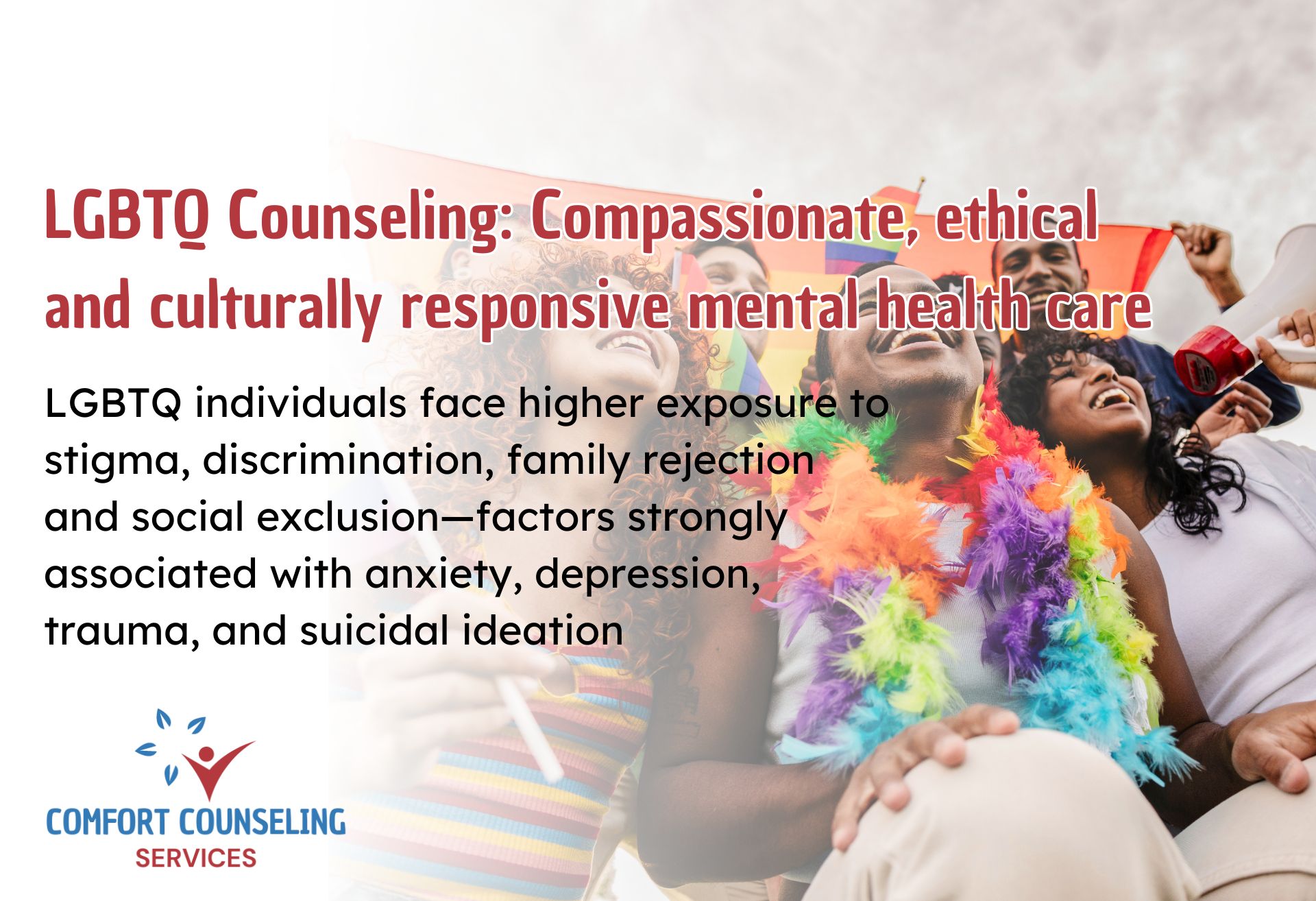
Research consistently shows that LGBTQ individuals face higher exposure to stigma, discrimination, family rejection and social exclusion—factors strongly associated with anxiety, depression, trauma, and suicidal ideation (Meyer, 2003; WHO, 2022).
Common issues addressed in LGBTQ counselling
Anxiety and depression
Minority stress—chronic stress arising from social prejudice—has been linked to higher rates of mood and anxiety disorders among LGBTQ populations (Meyer, 2003).
Identity exploration and self-acceptance
Many clients seek counselling to process questions around sexual orientation, gender identity, and personal values in a non-judgmental environment (APA, 2021).
Family and relationship conflict
Disclosure (“coming out”) may strain family systems, marriages, or faith communities, requiring mediation, grief processing and boundary setting (Ryan et al., 2010).
Trauma and abuse
LGBTQ individuals are at increased risk of bullying, violence and emotional abuse, which may result in complex trauma symptoms (WHO, 2022).
Spiritual and faith-related distress
For clients from strong religious backgrounds, internal conflict between faith beliefs and identity can create shame, fear or spiritual disconnection—areas that require sensitive, integrated counselling approaches (Pargament, 2013).
Ethical and professional foundations
LGBTQ counseling is guided by internationally recognized ethical standards that emphasize: Human dignity and worth, non-maleficence (do no harm),client autonomy and informed consent, evidence-based psychological practiceMajor professional bodies explicitly reject coercive or harmful practices such as conversion or reparative therapy due to their documented psychological harm (APA, 2009; WHO, 2022).
Counseling approaches used:
Person-centered therapy
Grounded in empathy, unconditional positive regard, and genuineness, this approach fosters safety and self-exploration (Rogers, 1957).
Cognitive Behavioral Therapy (CBT)
CBT helps clients challenge internalized stigma, negative self-beliefs, and anxiety-provoking thought patterns (Beck, 2011).
Trauma-informed counseling
Recognizes the impact of past abuse, rejection, or violence and emphasizes safety, empowerment, and emotional regulation (SAMHSA, 2014).
Family systems counseling
Supports families struggling with acceptance, communication breakdown, or value conflicts, promoting healthier relational dynamics (Goldenberg & Goldenberg, 2013).
Faith-Sensitive Integration (Where Appropriate)
For clients who desire it, counseling may respectfully integrate spiritual resources without imposing beliefs, helping clients process faith-identity tensions ethically (Pargament, 2013).
The importance of a safe counseling space
A core element of effective LGBTQ counseling is psychological safety. Clients benefit when counselors demonstrate cultural competence, use respectful language, maintain confidentiality and avoid assumptions (APA, 2021). A safe space allows healing from shame, fear and isolation—emotions often intensified during festive seasons like December.
December Reflections: Hope, Healing, and Belonging
The end of the year often invites reflection on belonging, purpose, and relationships. For LGBTQ individuals, counselling during this season can:
Support coping with holiday-related family stress.
Reduce loneliness and isolation
Encourage self-compassion and resilience
Facilitate goal-setting for the new year
Mental health care affirms that no one should navigate emotional pain alone.
Comfort Counselling Services’ Commitment
As a professional counselling organization with decades of experience, Comfort Counseling Services remains committed to:
Ethical, evidence-based counselling
Respect for human dignity
Cultural and contextual sensitivity
Confidential and non-judgmental care
Our role is not to dictate identity, beliefs, or life choices, but to walk alongside clients as they pursue emotional well-being, personal growth, and healthy relationships.
Conclusion
LGBTQ counselling is fundamentally about mental health, compassion and ethical care. In a world where many experience misunderstanding or rejection, professional counselling offers a space for healing, reflection, and empowerment. As we close December 2025, Comfort Counseling Services reaffirms its dedication to providing counseling that upholds both professional excellence and humane care.
If you or someone you know is struggling, seeking support is not weakness—it is wisdom!
References
American Psychological Association. (2009). Report of the APA Task Force on Appropriate Therapeutic Responses to Sexual Orientation. APA.
American Psychological Association. (2021). Guidelines for psychological practice with sexual minority persons. APA.
Beck, J. S. (2011). Cognitive behavior therapy: Basics and beyond (2nd ed.). Guilford Press.
Goldenberg, I., & Goldenberg, H. (2013). Family therapy: An overview (8th ed.). Cengage Learning.
Meyer, I. H. (2003). Prejudice, social stress, and mental health in lesbian, gay, and bisexual populations: Conceptual issues and research evidence. Psychological Bulletin, 129(5), 674–697.
Pargament, K. I. (2013). Spiritually integrated psychotherapy: Understanding and addressing the sacred. Guilford Press.
Ryan, C., Russell, S. T., Huebner, D., Diaz, R., & Sanchez, J. (2010). Family acceptance in adolescence and the health of LGBT young adults. Journal of Child and Adolescent Psychiatric Nursing, 23(4), 205–213.
Substance Abuse and Mental Health Services Administration (SAMHSA). (2014). Trauma-informed care in behavioral health services. U.S. Department of Health and Human Services.
World Health Organization. (2022). Mental health and sexual and gender minorities. WHO.