
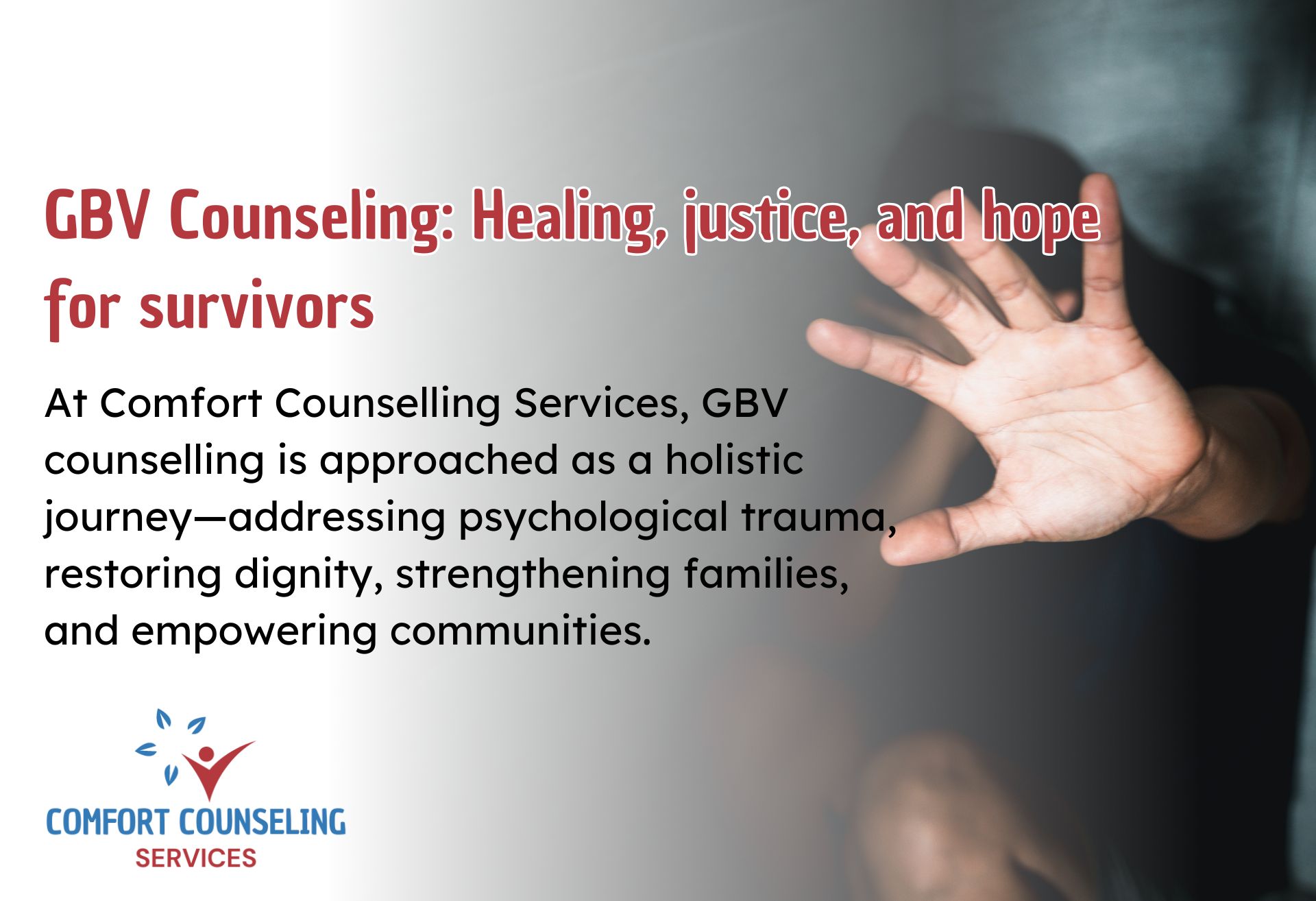
Gender-Based Violence (GBV) remains one of the most pervasive violations of human rights globally, cutting across age, gender, culture, and socioeconomic status. As the world concludes the 16 Days of Activism Against Gender-Based Violence each December, this season offers a solemn yet hopeful opportunity to reflect, respond, and recommit to healing and prevention. At Comfort Counselling Services, GBV counselling is approached as a holistic journey—addressing psychological trauma, restoring dignity, strengthening families, and empowering communities.
Understanding Gender-Based Violence
Gender-Based Violence refers to harmful acts directed at an individual based on their gender and is rooted in unequal power relations. It includes physical, sexual, emotional, psychological, and economic abuse, as well as harmful cultural practices (WHO, 2021). In Kenya and across Africa, GBV has been exacerbated by economic stressors, conflict, substance abuse, and entrenched gender norms (UN Women, 2023).
Survivors of GBV often experience complex trauma, including depression, anxiety, post-traumatic stress disorder (PTSD), shame, spiritual confusion, and social isolation (Herman, 2015). Without timely and sensitive intervention, these effects can persist across the lifespan and even impact future generations.
The role of counselling in GBV recovery
Counselling is a cornerstone of GBV response. Effective GBV counselling goes beyond crisis intervention to include long-term healing, empowerment, and restoration of agency. Research consistently shows that trauma-informed counselling significantly improves emotional regulation, self-worth, and resilience among survivors (Briere & Scott, 2015).
At Comfort Counselling Services, GBV counselling integrates:
- Trauma-Informed Care (TIC): Recognizing the pervasive impact of trauma and avoiding re-traumatization (SAMHSA, 2014).
- Survivor-centred approaches: Respecting autonomy, confidentiality, and informed choice.
- Culturally and faith-sensitive interventions: Acknowledging spiritual pain while drawing on faith-based resources for hope and meaning (Pargament, 2013).
- Systems approach: Working with families, communities, churches, and institutions to support sustainable recovery.
Psychological and emotional healing
Survivors often struggle with self-blame and internalized stigma. Cognitive Behavioural Therapy (CBT) and Narrative Therapy are particularly effective in helping survivors reframe distorted beliefs and reclaim their personal stories (Beck, 2011; White & Epston, 1990). Counselling sessions provide a safe space to process grief, anger, fear, and loss—emotions that are frequently suppressed due to fear of judgment or retaliation.
Group counselling also plays a vital role by reducing isolation and fostering peer support. Studies show that survivors who participate in structured support groups report improved coping skills and a stronger sense of belonging (Yalom & Leszcz, 2020).
Addressing spiritual and moral injury
For many survivors, GBV disrupts their relationship with God, faith communities, and moral frameworks. Questions such as “Where was God?” or “Why did this happen to me?” are common. Faith-integrated counselling helps survivors process spiritual wounds without minimizing their pain or promoting harmful forgiveness narratives (Imbens & Jonker, 2018).
Comfort Counselling Services emphasizes healing before reconciliation, affirming that safety, justice, and accountability are biblical and ethical imperatives (Psalm 82:3–4; Isaiah 1:17).
Working with perpetrators and families
Ending GBV also requires engaging perpetrators through accountability-based counselling and behaviour change programs. Evidence indicates that structured psychoeducation, anger management, and empathy-building interventions can reduce recidivism when combined with legal and community accountability (Gondolf, 2012).
Family counselling may be appropriate where safety is assured, helping to address intergenerational patterns of violence and promote healthier relational models.
Prevention, Advocacy and Community Training
GBV counselling is incomplete without prevention. Comfort Counselling Services conducts trainings in schools, churches, and organizations on:
- Healthy relationships and boundaries
- Emotional intelligence and conflict resolution
- Masculinity and femininity from a values-based perspective
- Child protection and safeguarding policies
Community-based prevention has been shown to significantly reduce tolerance for violence and improve reporting and early intervention (Jewkes et al., 2015).
A Call to Action This December
As we close 2025, Comfort Counselling Services calls upon individuals, families, faith institutions, and organizations to move from awareness to action. GBV counselling is not only about healing wounds—it is about restoring voices, rebuilding lives, and reshaping cultures.
If you or someone you know is affected by Gender-Based Violence, know that help is available, healing is possible, and your story matters.
References
Beck, J. S. (2011). Cognitive behaviour therapy: Basics and beyond (2nd ed.). Guilford Press.
Briere, J., & Scott, C. (2015). Principles of trauma therapy: A guide to symptoms, evaluation, and treatment (2nd ed.). SAGE Publications.
Gondolf, E. W. (2012). The future of batterer programs: Reassessing evidence-based practice. Northeastern University Press.
Herman, J. L. (2015). Trauma and recovery. Basic Books.
Imbens, A., & Jonker, I. (2018). Faith-sensitive trauma counselling with survivors of abuse. Journal of Psychology and Theology, 46(2), 87–99.
Jewkes, R., Flood, M., & Lang, J. (2015). From work with men and boys to changes of social norms and reduction of inequities in gender relations. The Lancet, 385(9977), 1580–1589.
Pargament, K. I. (2013). Spiritually integrated psychotherapy. Guilford Press.
SAMHSA. (2014). Trauma-informed care in behavioural health services (Treatment Improvement Protocol Series 57).
UN Women. (2023). Gender-based violence in Africa: Trends and responses.
World Health Organization. (2021). Violence against women prevalence estimates.
Comfort Counselling Services – Restoring hope, healing lives, transforming communities.