
Introduction
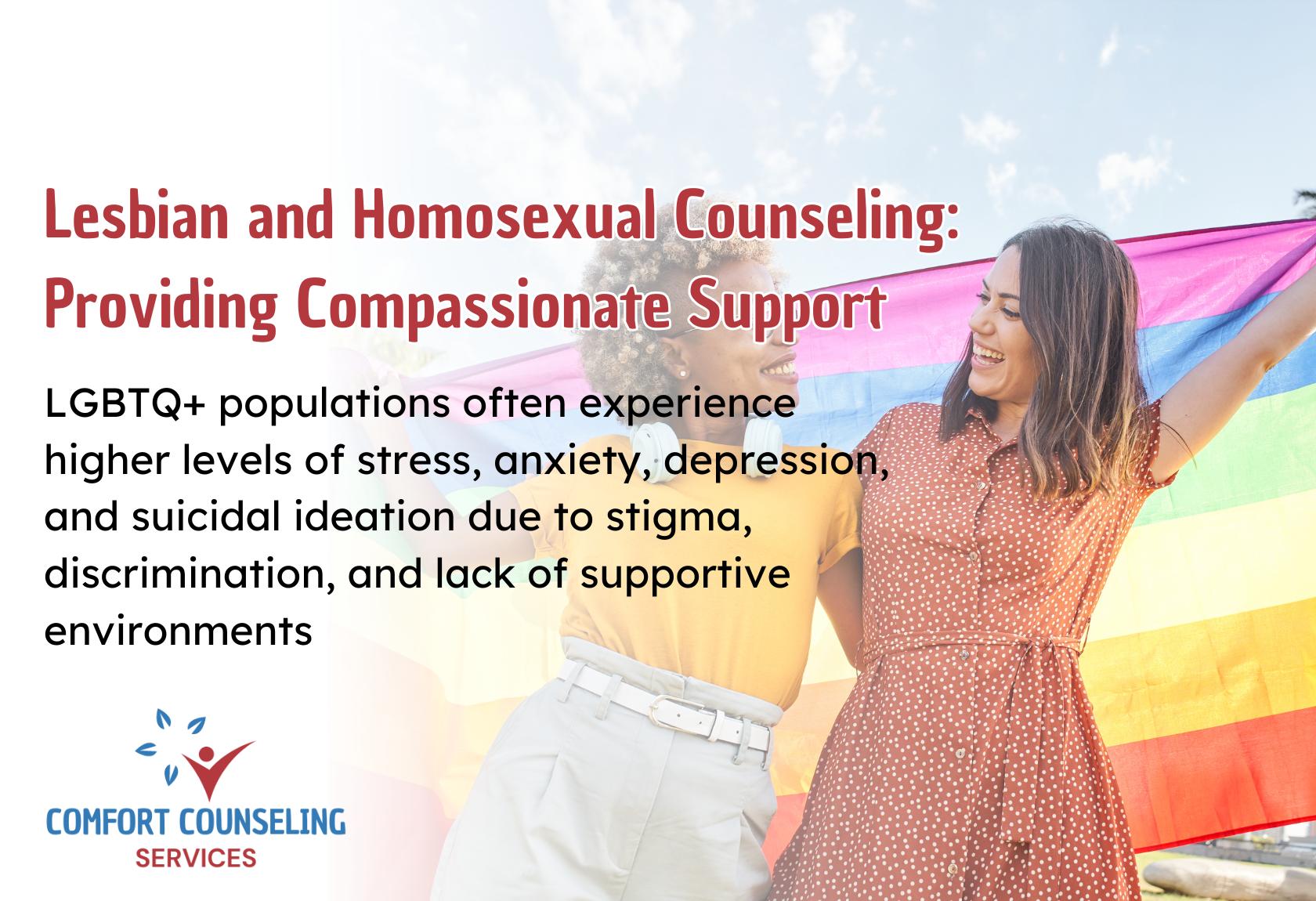
The need for counseling tailored to lesbian and homosexual individuals is both urgent and well-documented. Research indicates that LGBTQ+ populations often experience higher levels of stress, anxiety, depression, and suicidal ideation due to stigma, discrimination, and lack of supportive environments (Meyer, 2003; Cochran & Mays, 2009). For organizations like Comfort Counseling Services, offering affirming and culturally sensitive counseling can be transformative.
Understanding the Need
Scholars have consistently found that sexual minority individuals face unique mental health risks. The “minority stress model” highlights how social stigma, prejudice, and discrimination contribute to negative health outcomes (Meyer, 2003).
- A study published in the Journal of Consulting and Clinical Psychology reported that lesbian and gay adults are at significantly higher risk of mood and anxiety disorders than heterosexual adults (Cochran et al., 2003).
- According to Hatzenbuehler (2009), structural stigma—including discriminatory laws and social attitudes—has long-term negative effects on psychological well-being.
- In a Kenyan context, Mutua (2011) notes that cultural and religious factors amplify stigma, further reducing safe spaces for lesbian and homosexual individuals to access mental health support.
These findings confirm that effective counseling is not just beneficial, but essential.
What Lesbian & Homosexual Counseling Involves
Counseling for lesbian and homosexual clients often focuses on identity, relationships, resilience, and mental health. Some of the central elements include:
- Identity Affirmation – Affirmative therapy helps clients embrace their sexual identity and resist internalized homophobia (Ritter & Terndrup, 2002).
- Managing Stigma – Counselors can equip clients with coping strategies to deal with rejection or discrimination (Herek, 2009).
- Intersectionality – As Crenshaw (1991) argues, overlapping identities (such as gender, culture, and religion) influence personal challenges and resilience.
- Relationship Support – Studies show that same-sex couples experience stress from external rejection, which can impact relationship quality (Frost & Meyer, 2009).
- Mental Health Concerns – Lesbian and gay individuals face elevated risks of depression and suicidal ideation (King et al., 2008).
Barriers & Challenges
Despite the need, barriers remain:
- Fear of stigma in counseling settings: Research highlights that fear of non-affirming therapists often prevents LGBTQ+ clients from seeking help (Bieschke, Perez, & DeBord, 2007).
- Cultural and religious condemnation: In African contexts, homophobia is often reinforced by cultural and religious narratives (Nyanzi, 2013).
- Access issues: Financial constraints and lack of trained professionals limit access (American Psychological Association, 2021).
Principles & Best Practices
For counseling to be effective, best practices must be applied:
- Affirmative Therapy – Validating clients’ identities, rather than pathologizing them, is central (Davies, 1996).
- Confidentiality & Safety – Creating a secure environment encourages open dialogue (Corey, Corey & Callanan, 2011).
- Trauma-Informed Care – LGBTQ+ individuals often carry trauma from bullying, rejection, or violence (Lev, 2004).
- Cultural Competence – Counselors should integrate awareness of cultural and religious dynamics into therapy (Sue & Sue, 2016).
- Support Networks – Connecting clients to peer and community resources builds resilience (Pachankis, 2007).
Comfort Counseling Services’ Approach
Comfort Counseling Services is positioned to offer specialized support that integrates these best practices. With its history of combining counseling psychology with cultural sensitivity, the center can address both the personal struggles and the social pressures faced by lesbian and homosexual individuals. The use of evidence-based practices, such as cognitive-behavioral therapy and narrative therapy, ensures professional and compassionate care (Beck, 2011; White & Epston, 1990).
Outcomes of Counseling
Evidence suggests that affirmative counseling has measurable benefits:
- Reduced depression and anxiety (Newcomb & Mustanski, 2010).
- Higher self-esteem and identity integration (Riggle, Whitman, & Rostosky, 2008).
- Improved relationship satisfaction (Mohr & Fassinger, 2003).
Such outcomes underline the importance of specialized interventions for lesbian and homosexual populations.
Conclusion
Lesbian and homosexual individuals face disproportionate mental health challenges, yet counseling—when delivered with sensitivity and affirmation—can dramatically improve outcomes. As literature, research, and practice confirm, identity-affirming therapy reduces risks, enhances resilience, and fosters holistic well-being. Comfort Counseling Services stands ready to provide such compassionate, evidence-based support.
References
- Beck, J. S. (2011). Cognitive Behavior Therapy: Basics and Beyond. Guilford Press.
- Bieschke, K. J., Perez, R. M., & DeBord, K. A. (2007). Handbook of Counseling and Psychotherapy with Lesbian, Gay, Bisexual, and Transgender Clients. APA.
- Cochran, S. D., Sullivan, J. G., & Mays, V. M. (2003). Prevalence of mental disorders among lesbian, gay, and bisexual adults in the United States. Journal of Consulting and Clinical Psychology, 71(1), 53–61.
- Cochran, S. D., & Mays, V. M. (2009). Burden of psychiatric morbidity among lesbian, gay, and bisexual individuals. Journal of Consulting and Clinical Psychology, 77(3), 450–458.
- Corey, G., Corey, M. S., & Callanan, P. (2011). Issues and Ethics in the Helping Professions. Cengage.
- Crenshaw, K. (1991). Mapping the margins: Intersectionality, identity politics, and violence against women of color. Stanford Law Review, 43(6), 1241–1299.
- Davies, D. (1996). Pink Therapy: A Guide for Counselors and Therapists Working with Lesbian, Gay, and Bisexual Clients. Open University Press.
- Frost, D. M., & Meyer, I. H. (2009). Internalized homophobia and relationship quality among lesbians, gay men, and bisexuals. Journal of Counseling Psychology, 56(1), 97–109.
- Hatzenbuehler, M. L. (2009). How does sexual minority stigma “get under the skin”? Psychological Bulletin, 135(5), 707–730.
- Herek, G. M. (2009). Sexual stigma and sexual prejudice in the United States. In D. A. Hope (Ed.), Contemporary Perspectives on Lesbian, Gay, and Bisexual Identities (pp. 65–111). Springer.
- King, M., Semlyen, J., Tai, S. S., et al. (2008). A systematic review of mental disorder, suicide, and deliberate self harm in lesbian, gay and bisexual people. BMC Psychiatry, 8(70).
- Lev, A. I. (2004). Transgender Emergence: Therapeutic Guidelines for Working with Gender-Variant People and Their Families. Haworth Press.
- Meyer, I. H. (2003). Prejudice, social stress, and mental health in lesbian, gay, and bisexual populations: Conceptual issues and research evidence. Psychological Bulletin, 129(5), 674–697.
- Mohr, J. J., & Fassinger, R. E. (2003). Self-acceptance and self-disclosure of sexual orientation in lesbian, gay, and bisexual adults. Journal of Counseling Psychology, 50(4), 482–495.
- Mutua, M. (2011). Human Rights, Sexual Orientation and the Politics of Identity in Africa. Routledge.
- Nyanzi, S. (2013). Dismantling reified African culture through localised homosexualities in Uganda. Culture, Health & Sexuality, 15(8), 952–967.
- Pachankis, J. E. (2007). The psychological implications of concealing a stigma. Psychological Bulletin, 133(2), 328–345.
- Ritter, K. Y., & Terndrup, A. I. (2002). Handbook of Affirmative Psychotherapy with Lesbians and Gay Men. Guilford Press.
- Riggle, E. D. B., Whitman, J. S., & Rostosky, S. S. (2008). The positive aspects of being a lesbian or gay man. Professional Psychology: Research and Practice, 39(2), 210–217.
- Sue, D. W., & Sue, D. (2016). Counseling the Culturally Diverse: Theory and Practice. Wiley.
- White, M., & Epston, D. (1990). Narrative Means to Therapeutic Ends. Norton.