
Introduction
A terminal illness diagnosis is one of the most life-altering experiences an individual and their loved ones can face. Beyond the physical symptoms, terminal illness brings profound emotional, psychological, spiritual, relational, and existential challenges. Feelings of fear, grief, anger, guilt, hopelessness, and uncertainty often coexist, affecting not only the patient but also family members and caregivers.
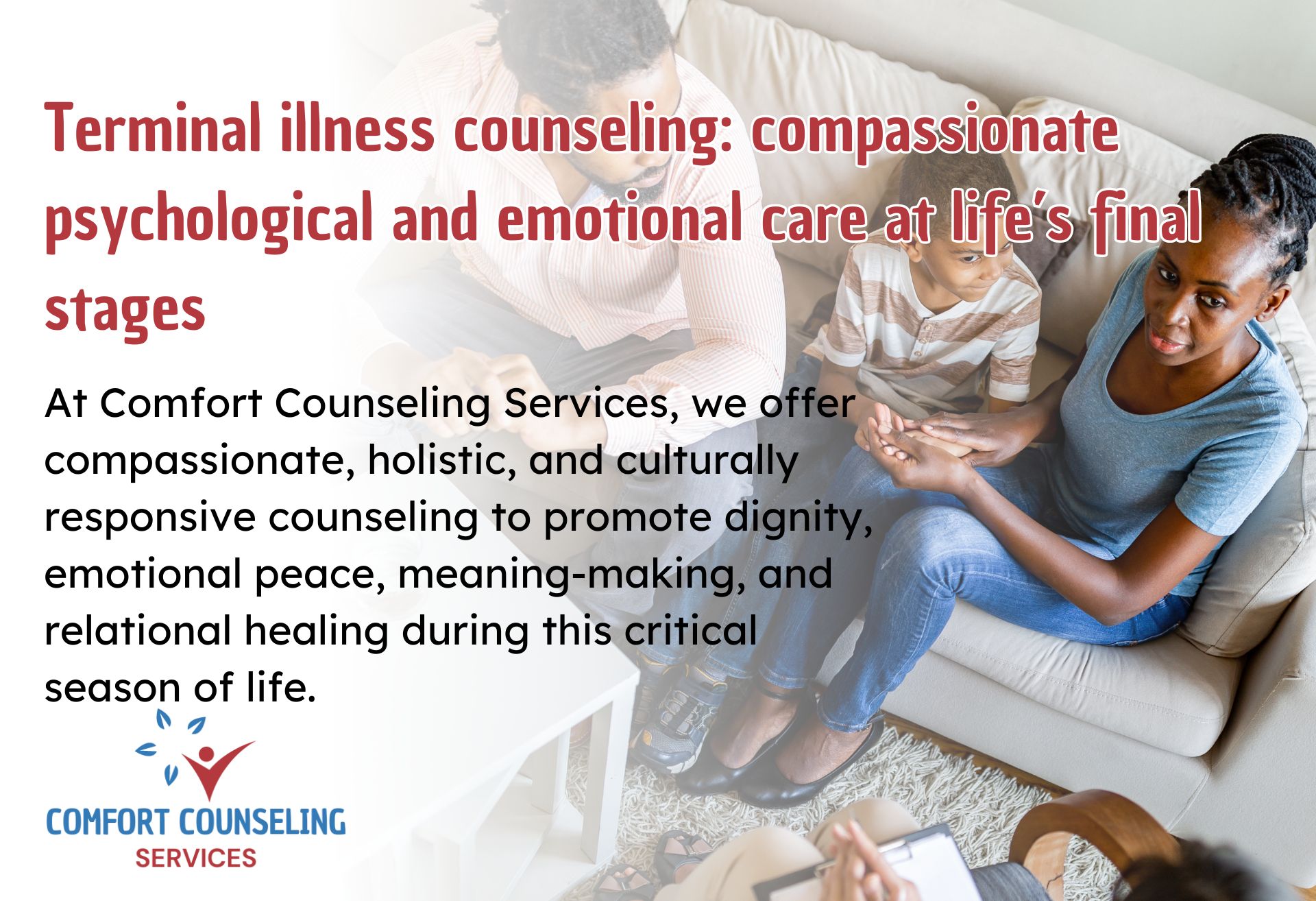
Terminal illness counseling is a specialized area of counseling psychology that focuses on supporting individuals and families as they navigate the emotional and psychosocial realities of life-limiting conditions. At Comfort Counseling Services, we offer compassionate, holistic, and culturally responsive counseling to promote dignity, emotional peace, meaning-making, and relational healing during this critical season of life.
Understanding terminal illness counseling
Terminal illness counseling refers to professional psychological and emotional support provided to individuals diagnosed with incurable or life-limiting conditions, as well as their families and caregivers. It often works alongside palliative care and hospice services to enhance quality of life rather than focusing on curative treatment (World Health Organization [WHO], 2023).
This form of counseling addresses:
- Emotional distress and anticipatory grief
- Adjustment to loss of independence and identity changes
- Fear of death and dying
- Unresolved relational conflicts
- Spiritual and existential concerns
- Family communication and caregiving stress
Research consistently shows that integrated psychosocial care significantly reduces anxiety, depression, and emotional suffering among terminally ill patients (Breitbart et al., 2022).
Psychological and emotional challenges of terminal illness
1. Emotional reactions and adjustment
Patients may experience a range of emotional responses including shock, denial, anger, sadness, anxiety, and eventual acceptance. These reactions are not linear and may fluctuate over time (Kübler-Ross & Kessler, 2023). Counseling provides a safe space to process these emotions without judgment.
2. Depression and anxiety
Studies indicate that depression and anxiety are common among terminally ill patients, often exacerbated by pain, fatigue, loss of function, and uncertainty (Mitchell et al., 2022). Early psychological interventions can significantly improve emotional well-being and reduce suffering.
3. Loss of identity and meaning
Terminal illness often disrupts personal roles, self-image, career identity and future plans. Counseling helps clients reconstruct meaning, purpose and legacy beyond physical capability (Breitbart & Poppito, 2022).
Family and caregiver support
Terminal illness affects the entire family system. Caregivers frequently experience caregiver burnout, anticipatory grief, guilt and emotional exhaustion. Family members may struggle with communication, unresolved conflicts and role reversals.
Terminal illness counseling supports families by:
- Facilitating honest and compassionate communication
- Helping families cope with anticipatory grief
- Addressing caregiver stress and compassion fatigue
- Preparing families emotionally for bereavement
- Strengthening family bonds during end-of-life care
Family-centered counseling has been shown to reduce caregiver distress and improve patient-family relationships (Hudson et al., 2022).
Existential and spiritual dimensions of care
For many individuals, terminal illness raises deep existential questions:
- Why is this happening to me?
- What has my life meant?
- What happens after death?
Spiritually integrated counseling—when aligned with the client’s beliefs—helps individuals explore hope, forgiveness, reconciliation, faith, and legacy. Meaning-centered and dignity therapy approaches have proven effective in reducing spiritual distress and enhancing peace at end of life (Chochinov et al., 2023).
At Comfort Counseling Services, we respectfully integrate faith-based counseling when desired, while honoring diverse belief systems and cultural values.
Therapeutic approaches used in terminal illness counseling
1. Person-Centered Therapy
Emphasizes empathy, unconditional positive regard, and acceptance, allowing clients to express fears and emotions freely (Rogers, 2021).
2. Cognitive Behavioral Therapy (CBT)
Helps clients manage distressing thoughts, reduce catastrophic thinking, and cope with anxiety and depression related to illness (Osborn et al., 2022).
3. Meaning-Centered Therapy
Assists individuals in finding meaning, purpose, and legacy even in the face of death (Breitbart et al., 2022).
4. Dignity Therapy
Focuses on preserving dignity, affirming life values, and helping clients leave meaningful messages for loved ones (Chochinov et al., 2023).
5. Grief and bereavement preparation
Supports both patients and families through anticipatory grief and prepares loved ones for post-loss adjustment.
Cultural sensitivity and ethical practice
Terminal illness counseling must be culturally responsive, recognizing beliefs around illness, death, family roles, and decision-making. In African and faith-based contexts, communal support, spirituality and family involvement play a significant role in end-of-life care.
Ethical practice emphasizes:
- Respect for autonomy and informed consent
- Confidentiality and dignity
- Non-maleficence and compassionate presence
- Collaboration with medical and spiritual care teams
The role of Comfort Counseling Services
At Comfort Counseling Services, we provide:
- Individual counseling for terminally ill clients
- Family and caregiver counseling
- Faith-sensitive and spiritually integrated counseling
- Grief, loss, and bereavement support
- Psychoeducation for churches, caregivers, and healthcare workers
Our approach is holistic, compassionate, and evidence-based, ensuring emotional comfort, psychological resilience, and relational healing during life’s most vulnerable moments.
Conclusion
Terminal illness counseling is not about giving up—it is about living meaningfully, loving deeply, and dying with dignity. Through compassionate psychological support, individuals and families can experience peace, connection, and emotional healing even in the face of terminal diagnosis.
If you or a loved one is navigating terminal illness, Comfort Counseling Services is here to walk with you—providing comfort, understanding, and hope when it is needed most.
References
Breitbart, W., & Poppito, S. (2022). Meaning-centered psychotherapy in the cancer setting. Oxford University Press.
Breitbart, W., Rosenfeld, B., Gibson, C., et al. (2022). Meaning-centered group psychotherapy for patients with advanced cancer. Journal of Clinical Oncology, 40(12), 1404–1413.
Chochinov, H. M., Bolton, J., Sareen, J., & Fuller-Thomson, E. (2023). Dignity therapy and end-of-life care: A systematic review. Palliative Medicine, 37(1), 45–58.
Hudson, P., Remedios, C., & Thomas, K. (2022). A systematic review of psychosocial interventions for family caregivers of palliative care patients. Palliative Medicine, 36(3), 451–467.
Kübler-Ross, E., & Kessler, D. (2023). On grief and grieving (Updated ed.). Scribner.
Mitchell, A. J., Chan, M., Bhatti, H., et al. (2022). Prevalence of depression and anxiety in patients with advanced illness. The Lancet Psychiatry, 9(4), 329–338.
Osborn, R. L., Demoncada, A. C., & Feuerstein, M. (2022). Psychosocial interventions for depression and anxiety in cancer patients. Journal of Psychosocial Oncology, 40(5), 567–586.
World Health Organization. (2023). Palliative care: Key facts. WHO.